Best 9 ADHD Apps to Help You Get Things Done (2025)
But First Things First...What Is ADHD?
Attention Deficit Hyperactivity Disorder (ADHD) is a common neurological disorder that affects both children and adults.
In fact, according to the Center for Disease Control, 9.4% of children between the ages of 4 and 17 have been diagnosed with ADHD.
In adults, 2.5% are estimated to be affected by it.
The most common ADHD symptoms for children and adults include impulsivity, difficulty concentrating on tasks, hyperactivity, and forgetfulness.
While some people may be familiar with ADHD as a children's diagnosis, many aren't aware it can progress to adulthood.
ADHD often shows up as:
- Trouble sustaining attention (especially on boring tasks)
- Impulsivity (doing first, thinking later)
- Restlessness or "internal hyperactivity"
- Forgetfulness and time-blindness
- Difficulty starting and finishing tasks (even when you want to)
Many people still think ADHD is "just a kid thing," but for lots of adults it's very real—and it can shift over time depending on stress, sleep, hormones, environment, and support.
If you've been feeling scattered, overwhelmed, or stuck in procrastination loops, you're not lazy—your brain may simply need different tools.
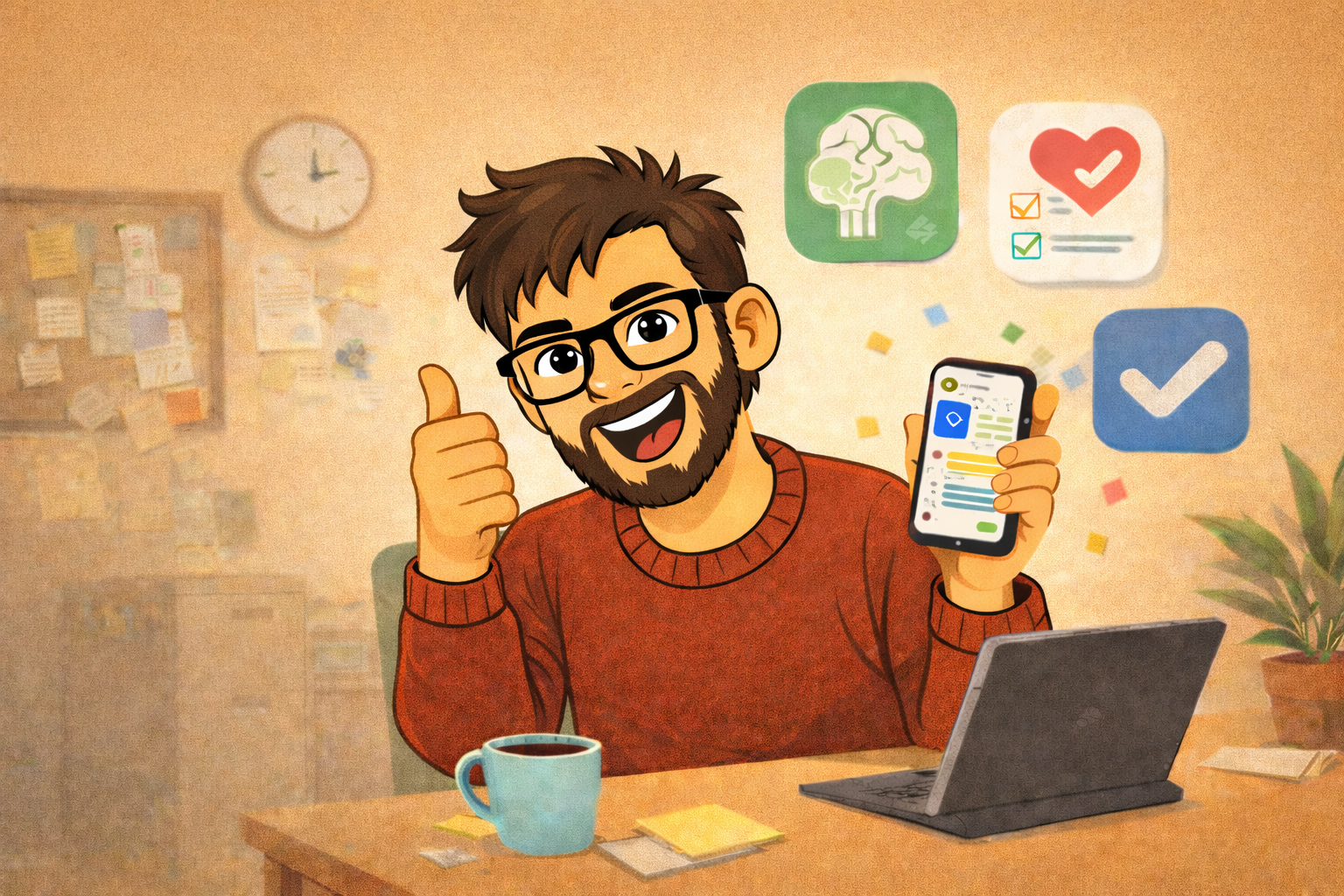
Best 9 ADHD Apps to Help You Get Things Done (2025)
In 2025, the best ADHD-friendly apps tend to share 3 traits:
- Fast capture (so you don't lose thoughts)
- Gentle structure (so you don't rebel)
- Smart reminders (so future-you actually shows up)
 1) Evernote (Capture + Organize)
Best for: dumping thoughts fast, saving articles, keeping "everything" in one place.
Why it helps ADHD brains in 2025: You can treat it like a second brain—voice notes, quick lists, saved links, and searchable storage so you stop relying on memory.
 2) Brain Focus (Pomodoro + Distraction Blocking)
Best for: starting tasks, staying in "focus sprints," breaking time into chunks.
2025 ADHD win: Fewer decisions. You hit start, your phone gets quieter, and you do the next small block—then rest, then repeat.
 3) Remember The Milk (To-do Lists that actually remind you)
Best for: task lists with strong reminders + recurring tasks.
Why it still works in 2025: It's straightforward, and ADHD brains usually do better with simple + reliable than "fancy but complicated."
 4) MindNode (Mind Mapping for cluttered thoughts)
Best for: brainstorming, planning essays/projects, turning mental chaos into a map.
2025 ADHD win: It supports visual thinking—great when linear lists feel suffocating or when your ideas come in "bursts."
 5) Asana (Projects made less overwhelming)
Best for: breaking big goals into tiny steps, especially at work or in teams.
Why it helps ADHD brains: It turns "one huge scary thing" into "a few small clickable things," with clarity on what's next.
 6) Sleep Cycle (Better sleep = better ADHD days)
Best for: tracking sleep patterns and waking up more gently.
2025 reality: ADHD and sleep are tightly linked. When sleep is off, focus, mood, and motivation often go with it—so sleep tools can be surprisingly high-impact.
 7) Due (Reminders that don't let you dodge)
Best for: persistent reminders for truly time-sensitive stuff.
ADHD-friendly feature: "I will forget this" protection. It keeps nudging until you act—ideal for meds, bills, leaving the house, or time-critical tasks.
 8) Focus@Will (Work music engineered to reduce distraction)
Best for: background audio that supports focus without pulling attention.
2025 ADHD win: When silence feels itchy but normal music hijacks your brain, this kind of "designed for focus" sound can help you stay on task longer.
 9) Todoist (Habit + task system with structure)
Best for: daily routines, recurring reminders, priority lists, and tracking progress.
Why it fits 2025: It's clean, fast, and integrates well with other tools—useful if you want one "home base" for tasks.
Bottom Line (2025 Take)
ADHD doesn't have to block your life—it often just requires the right supports, not more willpower.
Apps won't "cure" ADHD, but they can reduce the daily friction:
- Fewer missed tasks
- Less overwhelm
- More follow-through
- Better routines (especially when sleep improves)
If you try one thing first, choose the category that matches your biggest pain point:
- Forgetful? → Due / Remember The Milk / Todoist
- Can't start? → Brain Focus
- Too many thoughts? → MindNode / Evernote
- Overwhelmed at work? → Asana
- Sleep chaos? → Sleep Cycle